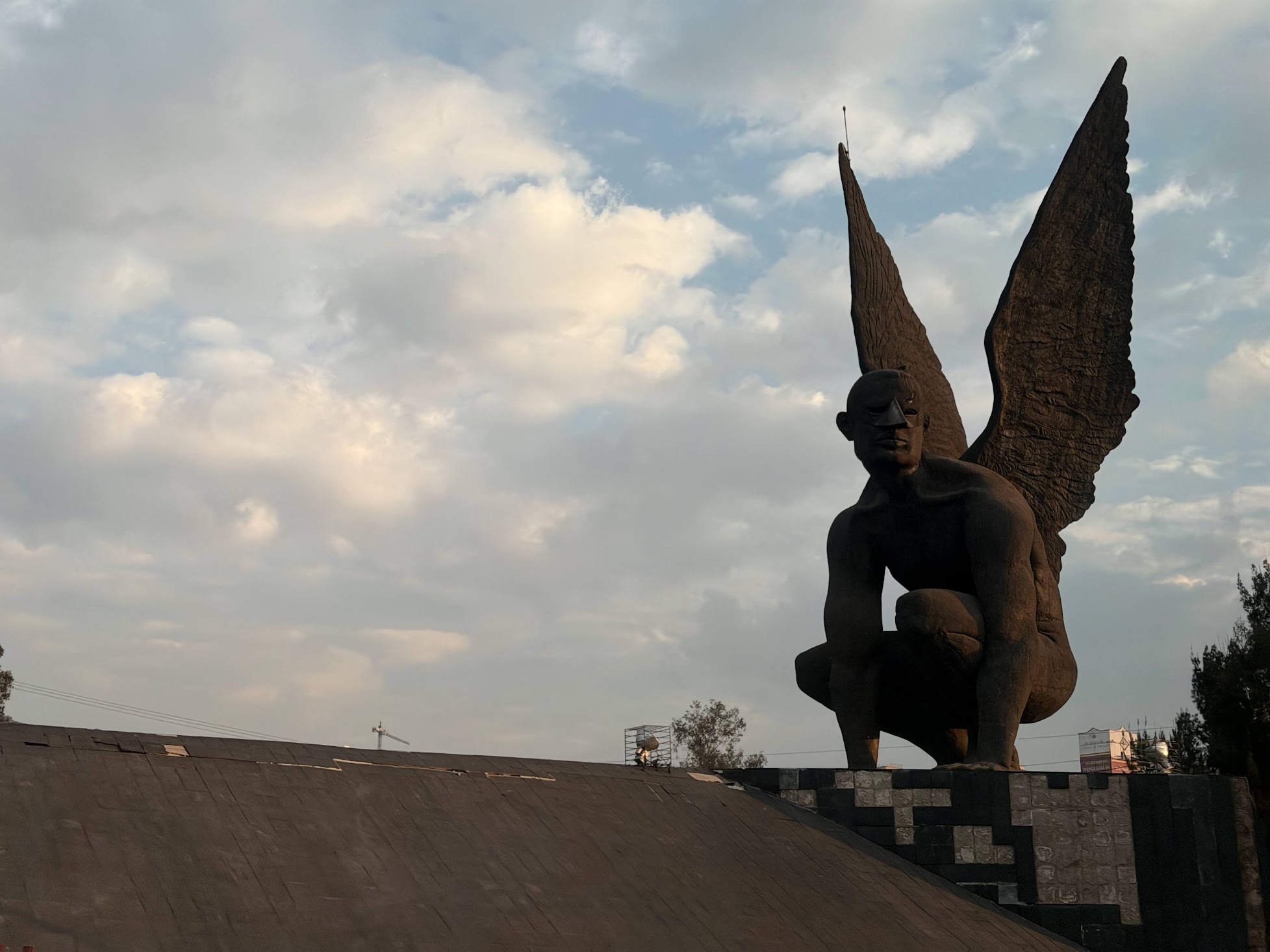
My XYL and I went to Mexico City this weekend for a short trip. It is an incredibly beautiful city, with a huge amount of culture and history, and we really enjoyed being there – we’re planning to go back later this year for a longer trip so we can spend some more time exploring.
Here’s some photos from the trip. The main highlights we saw were the National Museum of Anthropology, which is one of the most impressive and important archaeological museums in the world, and the ruins of Teotihuacan outside of the city.
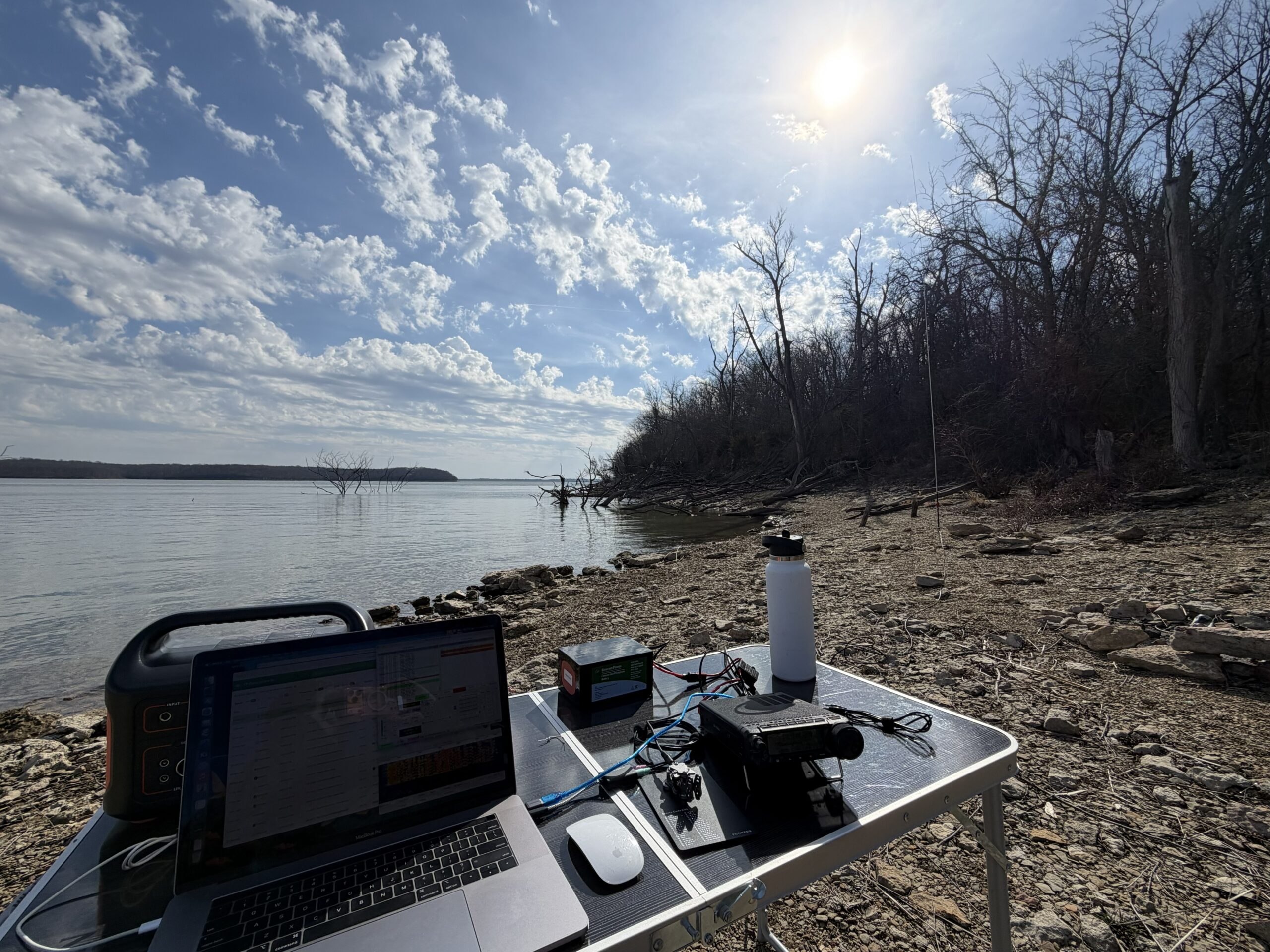
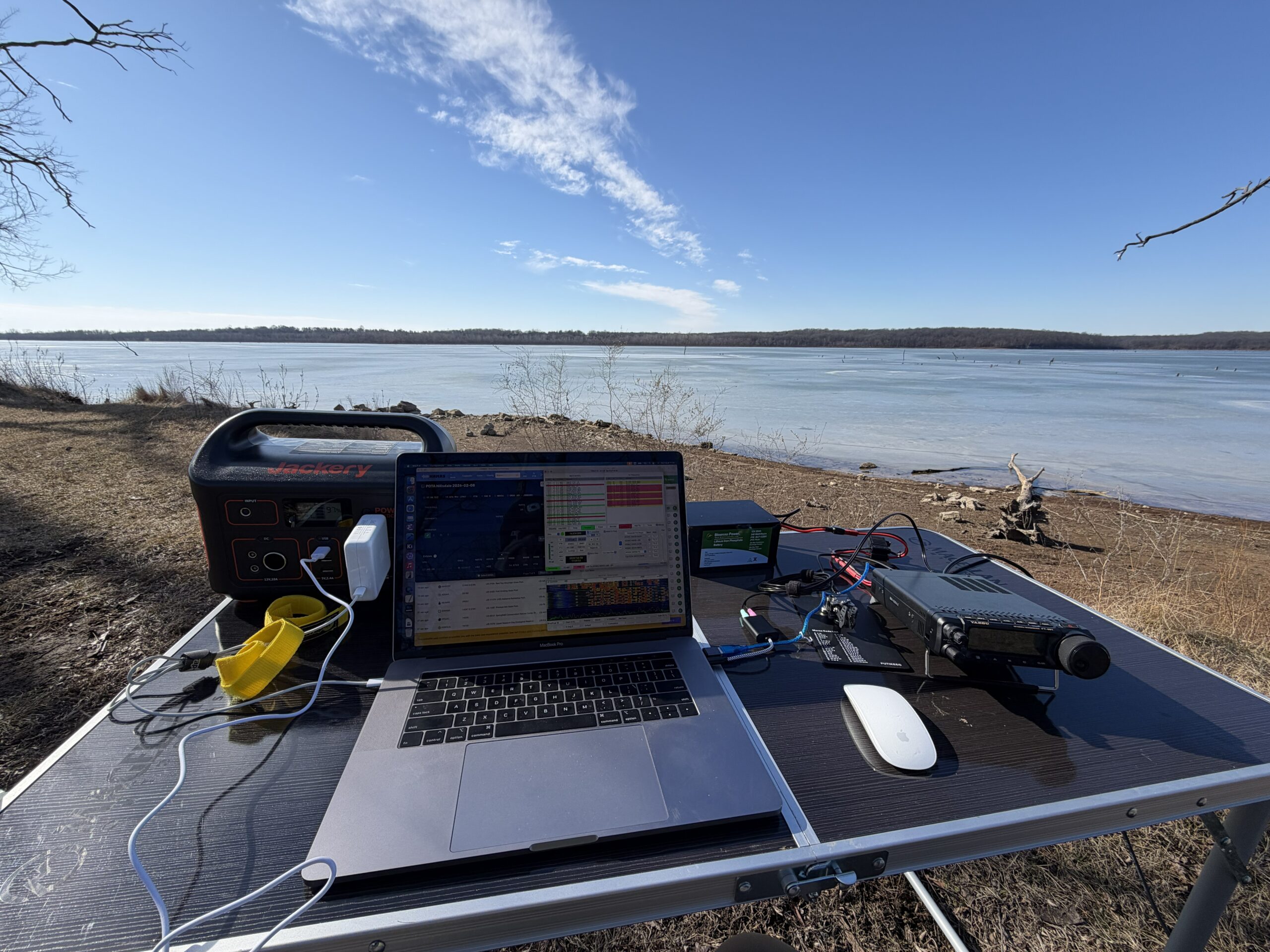
I went back to Hillsdale State Wildlife Area (US-7929) again yesterday afternoon. It was another beautiful, unseasonably warm day – it got well into the 70s while I was out there. I actually had to prop up my backpack to act as a “sun screen” for my radio, since it was getting too hot in the direct sunshine.
Recently, I’ve been bringing my laptop and doing a bit of FT8 before I start CW. Doing FT8 on an activation is pretty relaxing – you can sit back, read a book, enjoy the scenery, without having to constantly field calls.
I left a little early because a bunch of people showed up. I’m going to have to look for some different activation spots with fewer people around.
It’s been a bit since I’ve gotten out to do a “real” outdoor POTA activation. The weather in Kansas City was very nice this weekend, with highs in the 50s, so I took my radio out to Hillsdale State Wildlife Area (US-7929). This is an undeveloped wildlife area attached to (but separate from) Hillsdale State Park. There are a few boat ramps along the north side of the lake, that’s where I usually set up.
I spent some time this week working out how to set up FT8 on my FT-891, using my old MacBook to run WSJT-X. There were a bunch of weird issues to work through in order to get WSJT-X working on the Mac, which are probably worth their own post at some point.
Anyways, I got about 40 FT8 contacts, then took a break for a bit, then got out my key and got around 60 CW contacts. Doing FT8 for POTA is definitely a more relaxing experience – you can sit back, admire the scenery, watch the birds, talk to other people, etc. with no issues. Doing CW, on the other hand, requires almost 100% concentration, which is fun in its own way, but can also be exhausting.
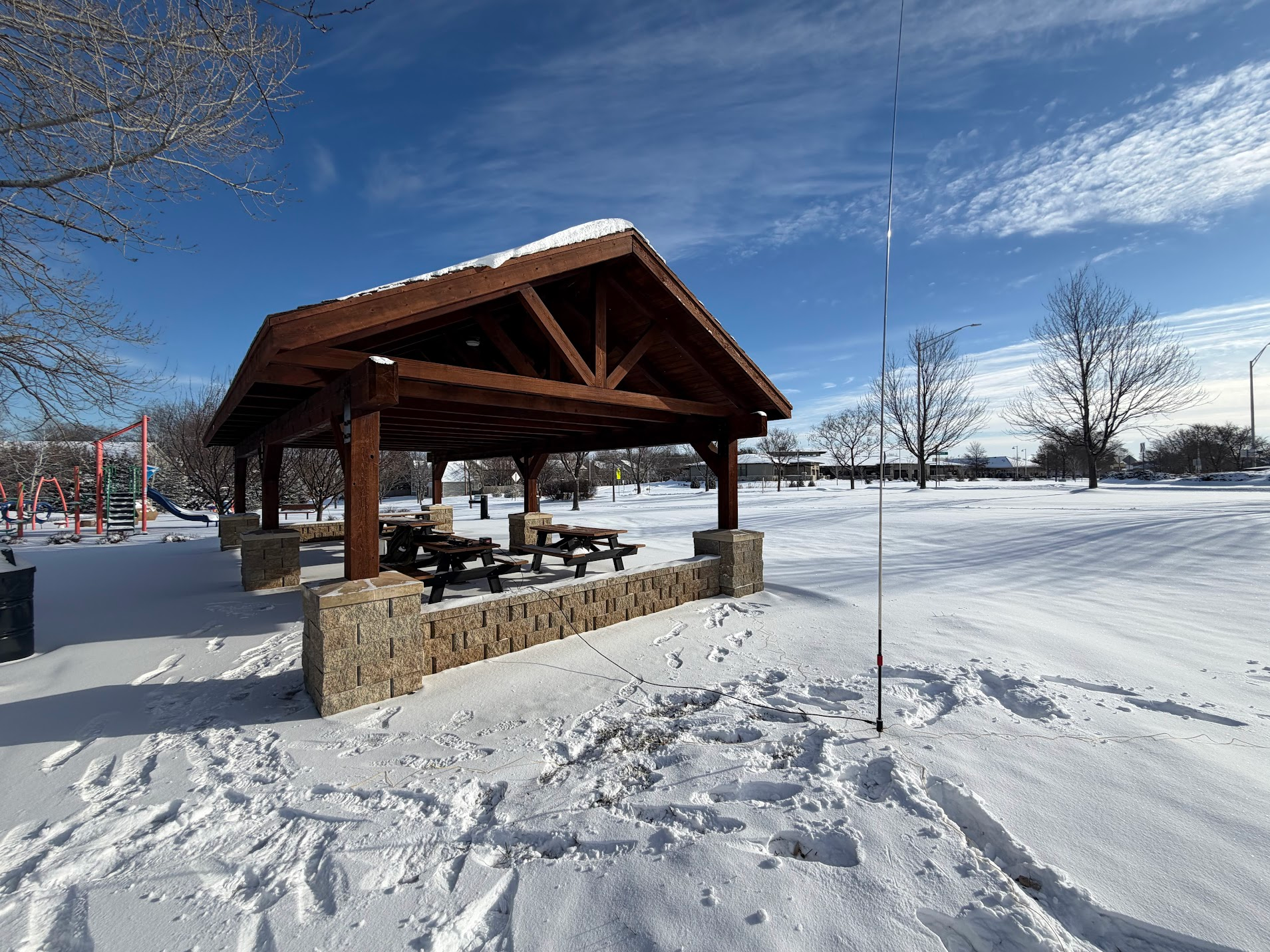
Like much of the country, Kansas City had a brutal winter storm this weekend. We spent all day Saturday snowed in at home, but this morning I was able to walk out to the local city park to do a quick outdoor activation for Winter Field Day.
This was definitely an outdoor winter radio experience – the air temperature was around 5 degrees Fahrenheit, with a light breeze to make things even colder. I stayed out for ~45 minutes, and got around 25 contacts.
The noise floor was a little high for some reason, so I was having problems hearing weaker signals. Other than that, the radio and antenna worked fine in the cold. They had been sitting indoors at room temperature immediately before I took them out, so I’m not sure how they would have worked if they had “cold soaked” for a few hours first. Something to try next time, I guess.
The main thing I learned is that I need some better gloves. I wore a thin pair of REI gloves so I could write, but my fingers quickly got too cold to be usable unless I kept my hand mostly in the sleeve of my jacket. I also couldn’t use my phone while wearing the gloves, and they kept getting stuck on the various Velcro bits of my kit.
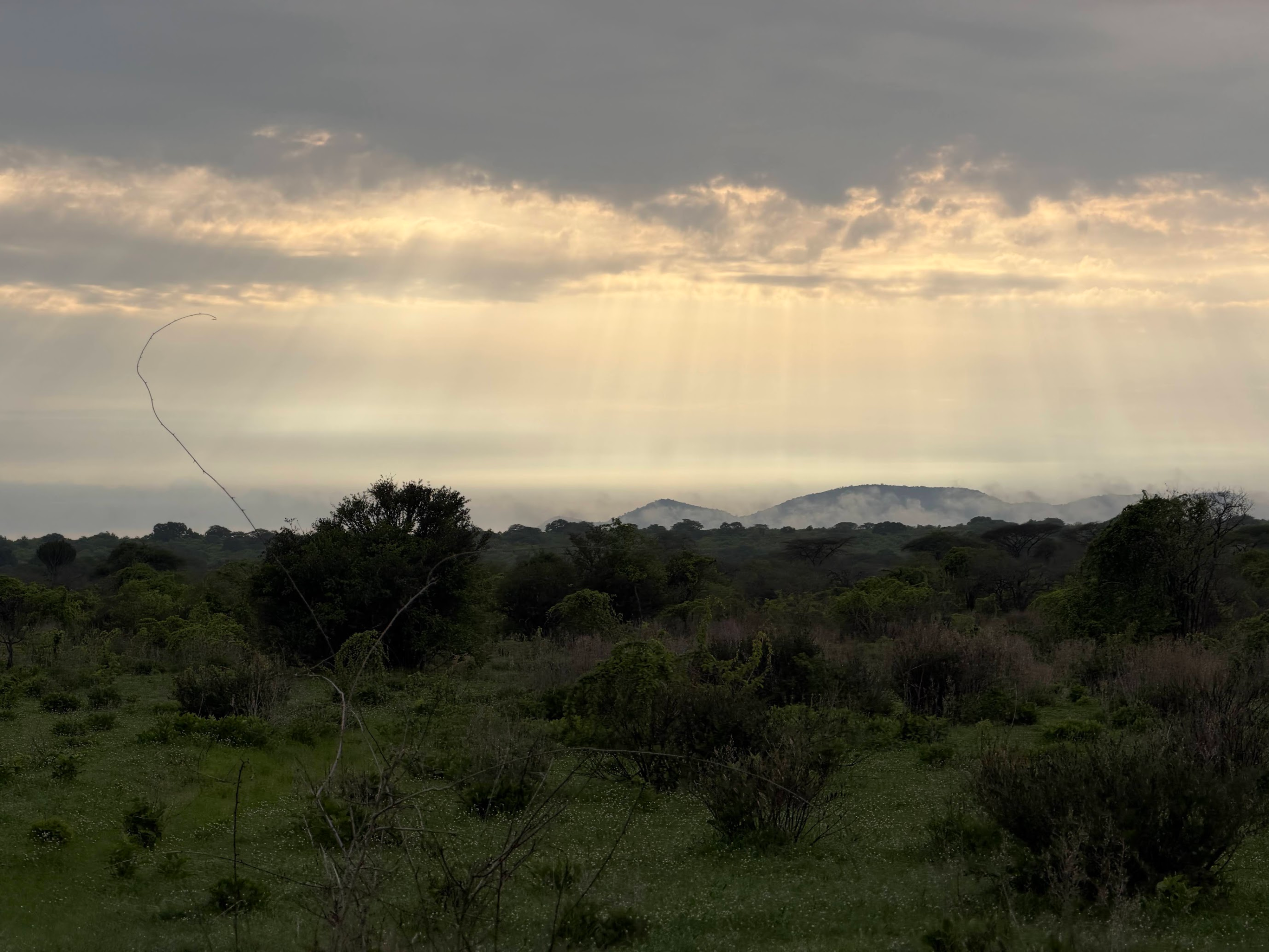
My wife and I spent most of January on vacation in Tanzania. We spent the first half of the trip doing a tourist safari in Nyerere and Ruaha National Parks, then spent a week on the island of Zanzibar. We saw all kinds of amazing things, including animals like elephants, lions, hyenas, hippos, giraffes, zebras, etc. It was amazing to see these wild animals in their original habitat, living their actual wild lives – we saw all kinds of interesting behavior, like hyenas fighting over a dead hippo carcass, zebras and impalas fighting for dominance, herds of elephants crossing rivers, eagles hunting for fish…
It was an incredible opportunity to get see a part of the world that I always knew existed but had never had the opportunity to see in person, and I’ll never forget the experience.
Unfortunately, this means that I missed Straight Key Month. Sacrifices must be made, I suppose.
I splurged and spent some Christmas money on a new Diamond SD330 screwdriver antenna for my car. Now that winter is approaching and/or here, I wanted to get something that I could use for in-car POTA activations, without having to get out of the car and set up an antenna in the snow and freezing cold.
The other option I looked at was the Yaesu ATAS-120, which is basically the same idea, but can be automatically controlled by Yaesu radios to tune the antenna for whatever frequency you’re on. I specifically decided against the ATAS – I’ve had multiple people tell me it was a bad product and they regretted buying it, either because it broke quickly, or because it just didn’t work very well for them.
Antenna Features
The Diamond antenna is a little more expensive than the ATAS, but it’s also larger and more physically robust, and had excellent reviews online for both signal and build quality. The screwdriver bit is motorized, and there’s a little controller with a rocker switch that you plug into your car’s 13 volt outlet which lets you extend and retract the antenna (in order to tune it). You have to run a cable from the controller to the antenna, which I have running through my back seat into the trunk.
The tuning process is a little finicky – the antenna has an extremely high Q, which means it needs to be tuned almost for the specific frequency you’re on. Shifting by even 10 KHz can throw the SWR totally out of whack. This is one area where I do regret not having the ATAS – it would have handled this bit for me automatically. That said, it’s not a huge pain, and I’ve easily been able to get an SWR below 1.5 on every band I’ve tried so far.
Somewhat hilariously, this is the only antenna I own which is capable of the 80 meter band. I guess when my knee ailment finally hits, I’ll have to go out to the car to complain about it.
Installation
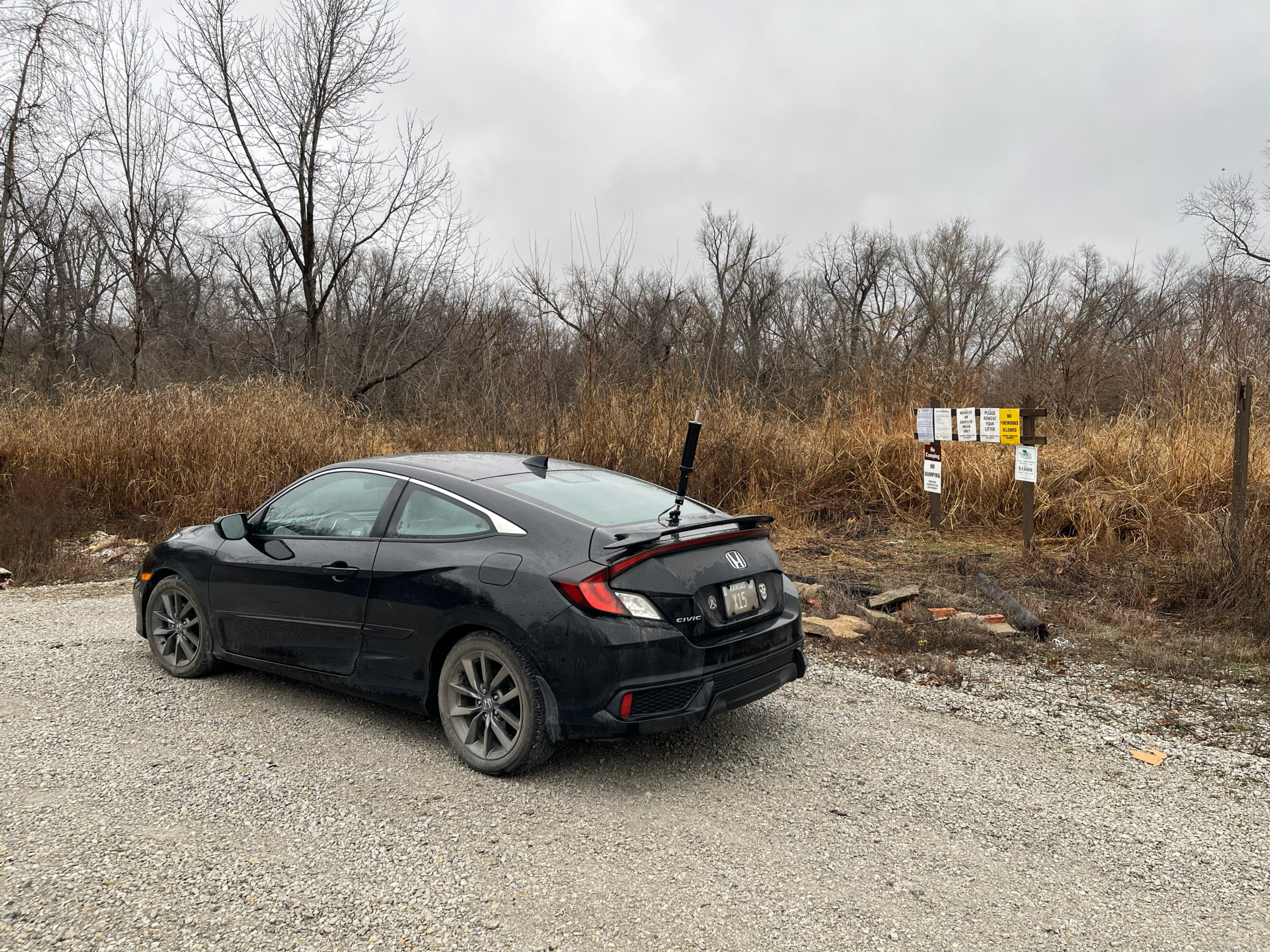
I’m using a Diamond K400 antenna lip mount, which I currently have installed on the front of my car’s trunk cover. I have a small Honda Civic, so there’s not a lot of options available for mounting. I’m not entirely sure how I feel about the mount yet – it seems a little “insubstantial”, but there’s also not really any other good options for mounting a gigantic antenna to a tiny car. I don’t plan on leaving the antenna attached to the car permanently, only when I’m actively using it, so I hope that this will work out OK as a long term solution.
The antenna screws on to the top of the mount. There is a short coaxial lead which I just have running into the trunk through the weather seal, along with the control cable for the antenna motor. On the inside of the car, the cables pop out between two of the passenger seats in the back. I just routed them around the seat pillows and underneath the upholstery to keep them out of the way.
Creating a good RF ground is extremely important for these types of antennas. The “antenna” that you see is actually only half of an antenna – the other half is the car’s chassis, and there needs to be a good electrical connection in order for this to work.
The mount has set screws which are designed to grind through the car’s paint and make contact with the bare metal underneath, in order to get a ground connection. This damages the paint, but I’m not too worried about it since it’s in an inconspicuous location and could probably easily be repaired with some touch-up paint.
Verdict
I’ve done a few POTA activations with the antenna already, and had no issues. It definitely does not get out as good of a signal as the MC-750, however, it’s a compromise antenna that’s intended to let me keep doing POTA during the winter. It seems like it’s going to work great for that.
I took my new mobile antenna out today to do some more POTA. I wanted to try doing a “run” of activations, where you hit up a string of parks, one after another, without having to do a bunch of setup and teardown. The timing was perfect, as the warm weather officially departed today – it was about 60 Fahrenheit when I woke up, and around 20 Fahrenheit just a few hours later.
I stopped at the Dr. Frederick Marshall State Conservation Area (US-10579), as well as two “State Conservation Areas” (US-10578 and US-11226) that are really just boat launches for fisherman (and not particularly inspiring ones either). US-11226, in particular, is about 50 by 50 feet and filled with trash and dead possums.
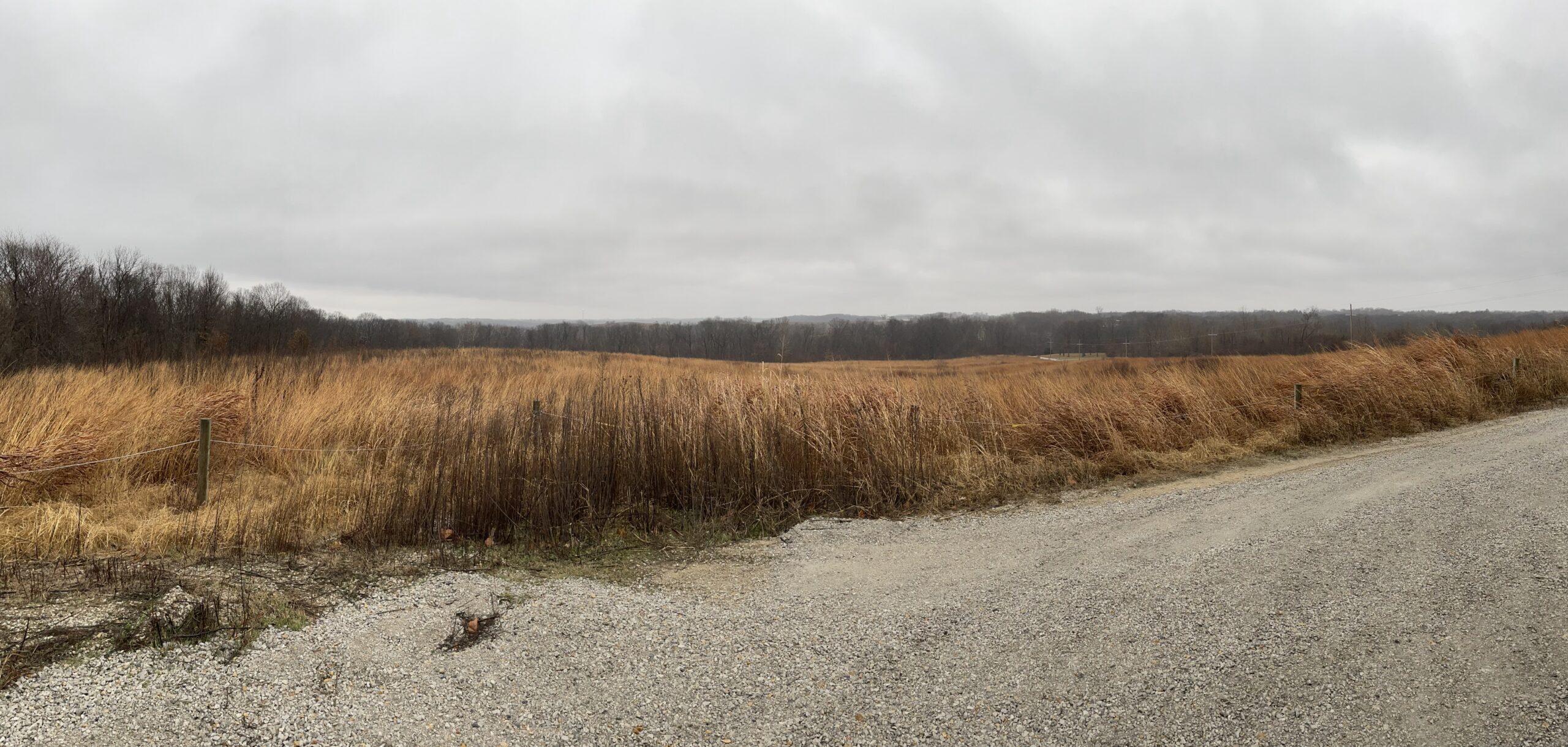
The conservation area was actually pretty beautiful – the parking lot had a beautiful view over a sweeping tallgrass prairie field, which was particularly dramatic with the sleet and gusting winds. Maybe some day I’ll go back and take my dog.
The new screwdriver antenna worked pretty well – it is definitely not as efficient as the MC-750, but it’s certainly serviceable, and I was getting calls and decent signal reports from both coasts. I’ll post another blog post tomorrow with some more information about the new antenna.
The weather here in Kansas City continues to be insanely nice for December, so I’m continuing to try to make use of the opportunity to do as much POTA as possible (especially since I’m going to be out of the country for most of January). This morning I went out to Miami State Fishing Lake (US-7391), which is about 45 minutes south of Kansas City, near Osawatomie and Paola.
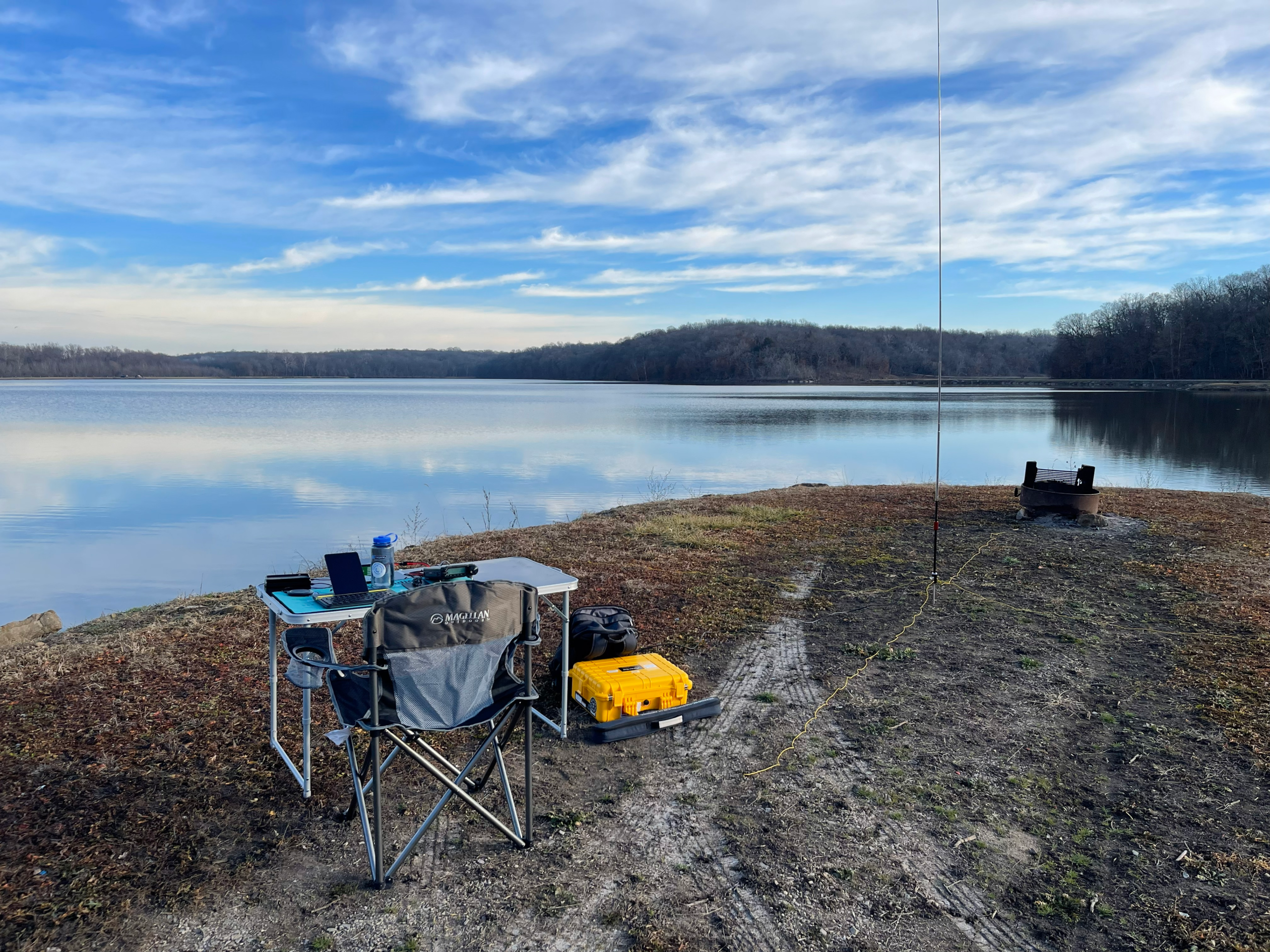
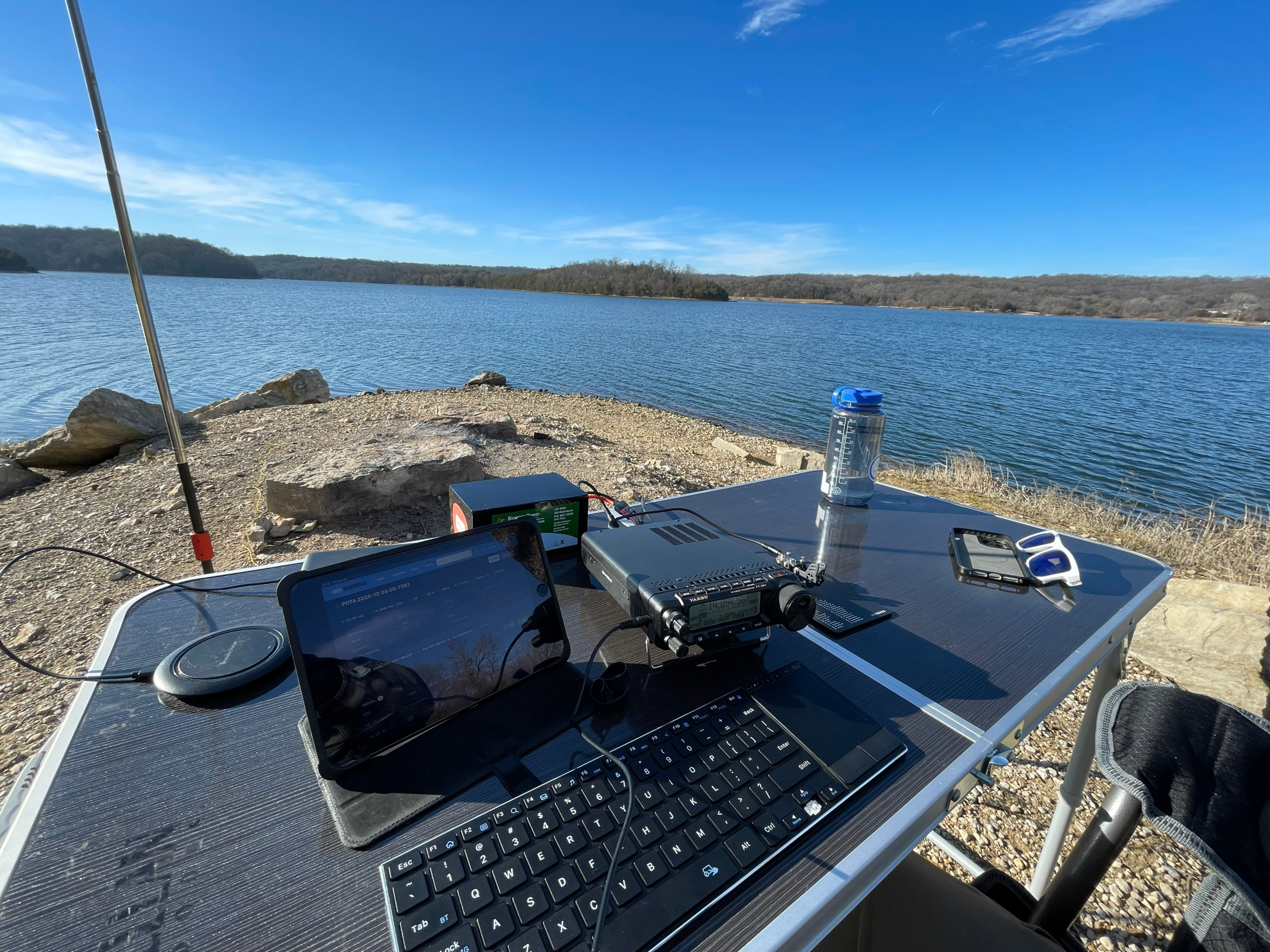
The lake itself is really nice – it’s very remote, and there are a bunch of man-made “piers” with camp sites and fire pits, as well as a boat launch and vault toilet. I set up on one of the piers overlooking the lake, with my nice new POTA work pad that my XYL got me for Christmas.
I started on 20 meters and had about 60 calls from the United States and Ontario. After about an hour, I switched to 15 meters and immediately had several DX calls – the first person to call me on 15 meters was from Belgium, and I also had a call from Italy and a park-to-park from England. This was my first time using the antenna on 10 and 15 meters – it worked great on all three bands.
I went out to Douglas State Fishing Lake this morning, which is a man-made lake about 40 minutes southwest of Kansas City. This park doesn’t seem to get a lot of love on POTA – this was only its 6th activation of 2025.
The weather was beautiful, sunny and about 60 degrees Fahrenheit. I set up at a boat ramp on the east side of the lake. I was expecting to be the only person there, due to how remote the area was, but there were actually a bunch of people launching boats and walking dogs. There’s a nice fire pit here overlooking the lake – I think I am going to have to get into campfire POTA soon.
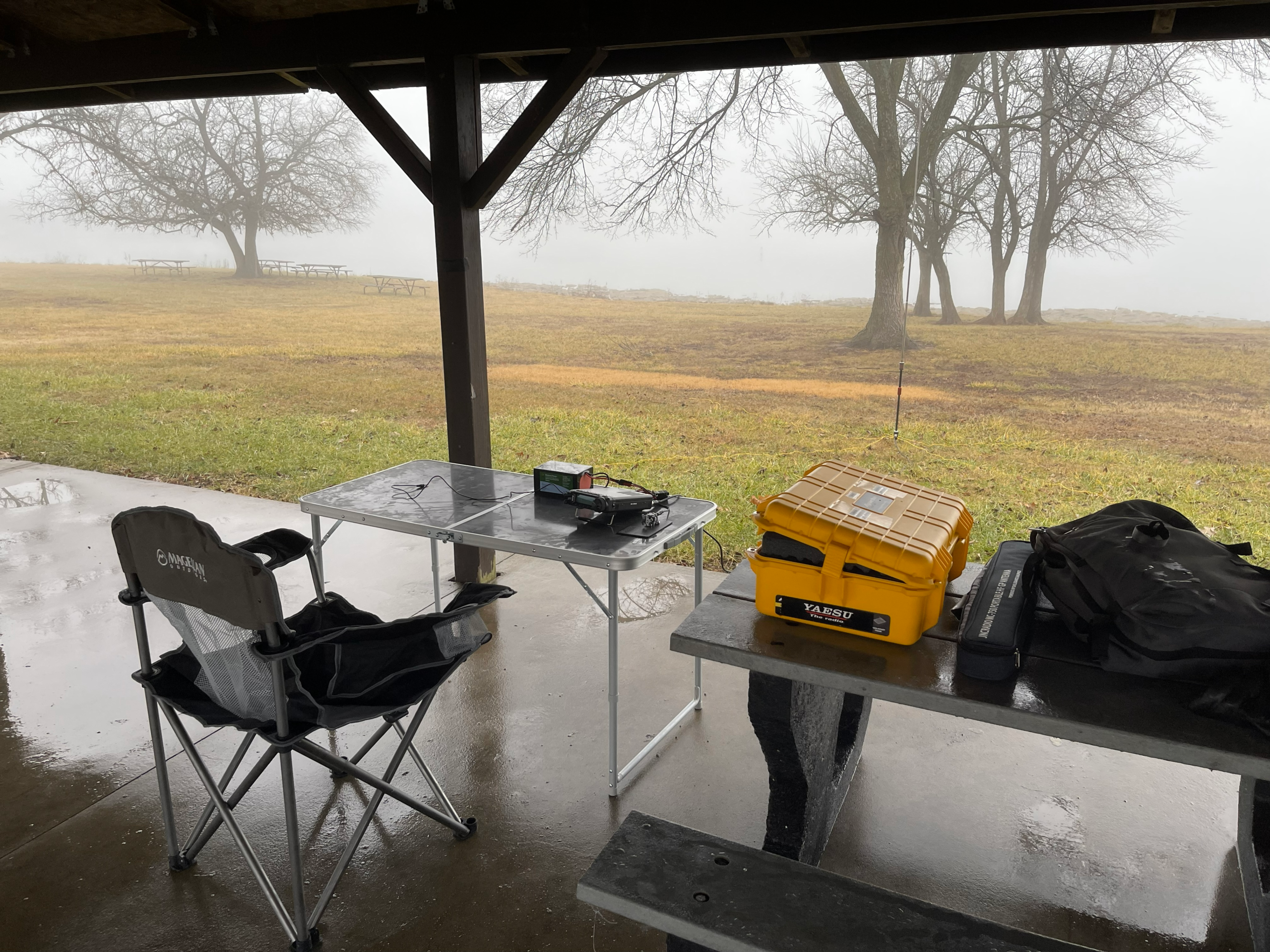
It is still extremely warm here in Kansas City (50s and 60s Fahrenheit), so I went out and did another POTA activation this morning. It was extremely damp and foggy – I picked a spot with a picnic shelter because I was hoping it’d be drier, but everything was still pretty soaked, so I set up my portable table and chair. I had about 50 CW contacts on the 40 meter and 20 meter bands.
This was the first time I tried to use the 40 meter loading coil on my portable whip antenna – it seemed to work fine. My SWR was around 1.3 and I had plenty of contacts.
I also stopped at Lone Elm on the way home and got about 30 more contacts. I would like to get kilos for the three National Historic Trails that pass through Kansas City.